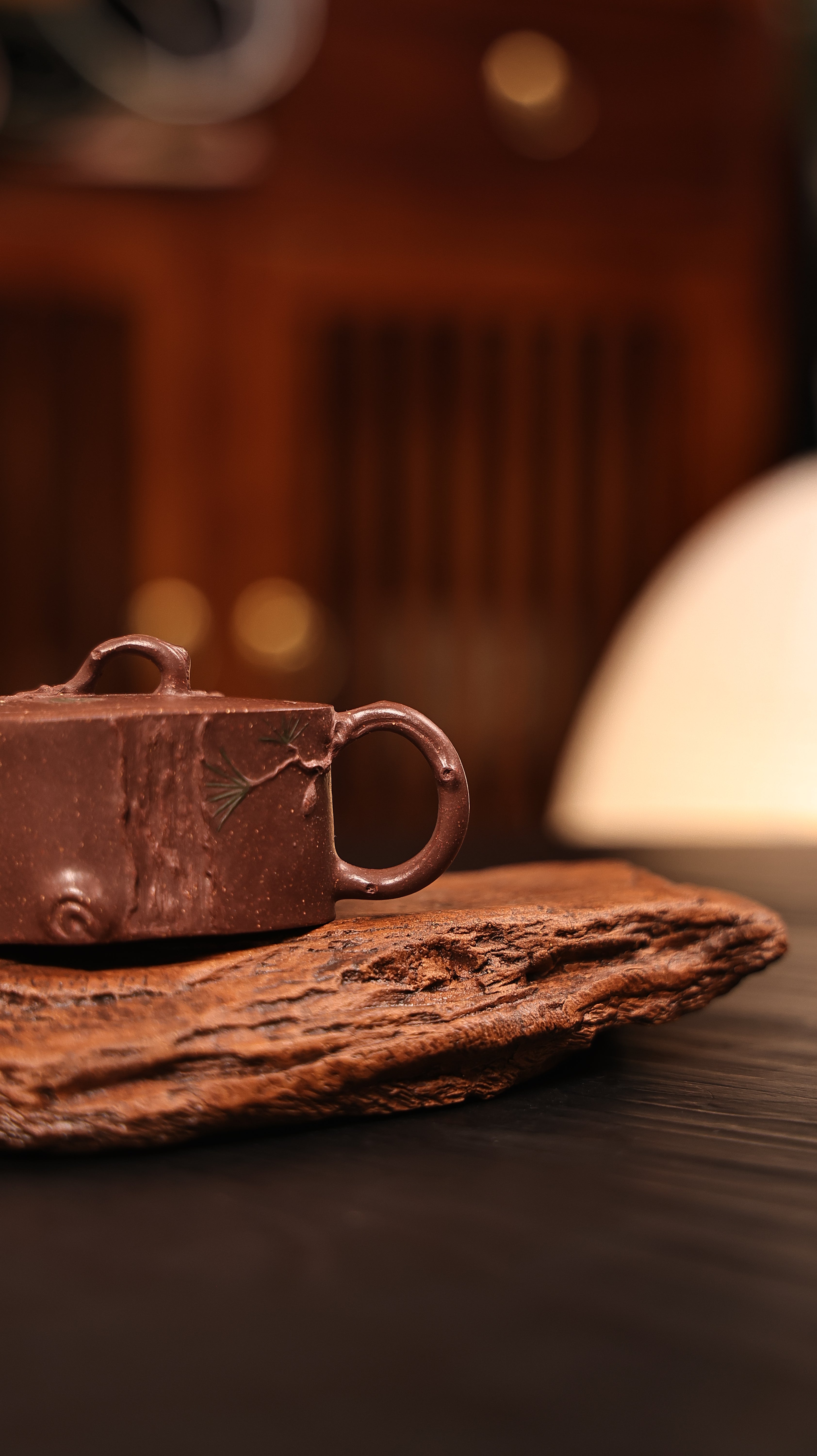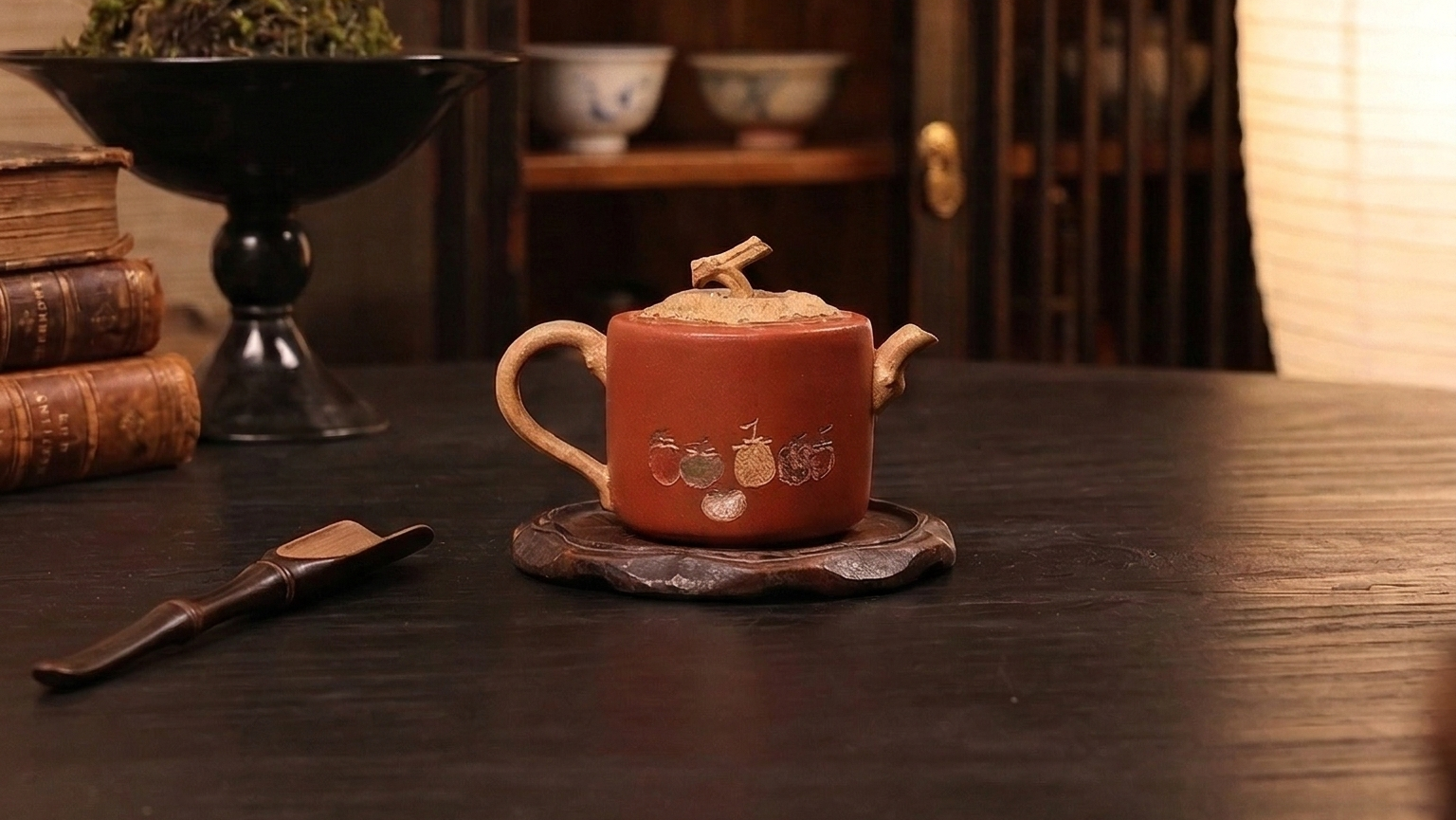
Sustained legacy shapes Eastern ceramic pots alongside timespans,
Expressing singular properties derived through homegrown mauve substances, such jars build up a glow amid employment, refining bouquet released from infused beverages.
Understanding Yixing Earth: Thorough Insights into Zisha
Many enthusiasts acknowledge the singular consistency of Yixing amethyst clay, a linchpin of enduring Chinese craft. Springing from the Yixing region of Jiangsu province, this exquisite clay holds an elaborate mineral structure, that delivers amazing qualities to the executed containers. Types within Zisha, including Zi Mud, Duan Ni Mud, and Jiang Xi Mud, each displays separate hues, textures, and processing traits, changing the ventilation and the final accent ripening of the beverage.
Chinese Urn Legacies: Investigating Expertise
Asian teapots embody beyond mere flasks for drink; they embody centuries of inherited artistry. From the iconic Yixing clay variations, respected for their transpiring nature which adds distinctive nuances to the liquid, to the ornate porcelain from Jingdezhen, each piece conveys a story of effort. The crafting process is an precise pursuit, often transmitted through clans of craftsmen. These artists use traditional procedures such as hand-building, sculpting on wheels, and ornamenting, demonstrating profound reverence for the clay and the craft itself. Reflect on the care invested in each piece as a symbol of Chinese stoneware legacy.
- Fine containers: a celebrated option.
- Fine china teapots: distinguished by their delicate design.
- Modeling techniques: a demanding yet gratifying procedure.
Chinese Zisha Container Handling: Maintaining Your Precious Object
Suitable care of your esteemed Yixing Zisha teapot is important to securing its beauty. Crafted from renowned purple sand sediment, these exceptional teapots gain a warm patina after use, substantially boosting their allure. Stay away from washers; a soft rinse with moderate temperature hydrous matter is adequate. Avoid searing water for purifying the teapot, as it may damage its clay. Allow it to fully dry away from powerful ultraviolet exposure. Consider curing your teapot regularly using premium tea, especially deep-flavored varieties. Here is a brief manual:
- Wash out with lukewarm moisture.
- Eschew washers.
- Facilitate it to dry completely.
- Season with fine tea.
Heritage of Yixing Teapots: From Simple Starts
The chronicle of Yixing teapots commences humbly during the Qing dynasty, near the 16th age. Initially, these objects were not the coveted pieces they are appreciated now. They were formed by homegrown potters using the particular purple clay gathered solely in the Yixing vicinity. These early artifacts were mostly utilitarian, targeted for commonplace operation and often modest in form. It was not until the subsequent dynasty that they commenced to earn recognition beyond mere functional articles.
Determining the Perfect Fine Pitcher: A Newcomer's Handbook
Embarking the world of Yixing teapots can be difficult, but eschew resisting! For starters, the key factor is understanding the clay. Validated Yixing clay is prized for its diffusibility, allowing the teapot to take in the tea's aroma over time, enhancing every developing session. Imagine the contour; traditional bulbous shapes prevail, yet individual preferences are important. Lastly, review the glaze—while some favor an unfinished appearance, others like a soft gloss. Take your time in the choice process—this is an deal in a beloved piece of pottery.
Traditional Clay Pitchers and Their Contribution on Chinese Tea Legacy
Zisha pots, originating from Yixing, China, have profoundly changed ancient Chinese potion culture. Those Yixing clay teapots, prized for their distinctive cast, surface, and exceptional ability to impart a subtle flavor to the liquid, are more than mere devices; they are appreciated artworks and symbols of prominence. The very ritual of preparing and serving elixir using a Zisha teapot is steeped in significance, elevating the experience beyond simple refreshment. Successions of artisans have developed their techniques, passed down through lineages, resulting in highly appreciated pieces. Consequently, Zisha teapots are frequently accumulated, playing a crucial part in cultivating traditional appreciation for aesthetics and the science of beverage ceremonies.
- Peculiar Clay Composition
- Conveying Subtle Flavor
- Exquisite Craftsmanship
Recognizing Certified Sought-After Native Jars
Acquiring a certified Yixing teapot can be a gratifying experience, but the field is often swamped with forgeries. Dividing between a genuine antique and a modern reproduction requires meticulous inspection. Key evidence include the clay's rich brown shade, often displaying marked designs, and the nonexistence of modern roasting Chinese Teapot imprints. The configuration should look natural sophistication, reflecting the traditional Yixing approach. Finally, studying the artist's symbol is vital to verify truthfulness against certified sources.
- Assess the clay's structure.
- Look for inconsistencies, indicative of tailored quality.
- Seek an authority for validation.
Investing in Eastern Earthenware: A Elaborate Explanation to Purple Clay Analysis
The sector of Native Zisha pieces presents a distinct possibility for educated admirers. Increasingly, the worth of these traditional artifacts is guided by diverse components, such as the standard of composition, the dexterity of the potter, the historical importance, and, naturally, the present trade. Novices should prioritize on studying the several kinds of Zisha clay—such as Glacial, Tranquil Vessel, and Scarlet Earth—and researching the traits linked to each. Diligent assessment of the pot's form, hue, and seal is concurrently mandatory to make competent evaluations when investing.