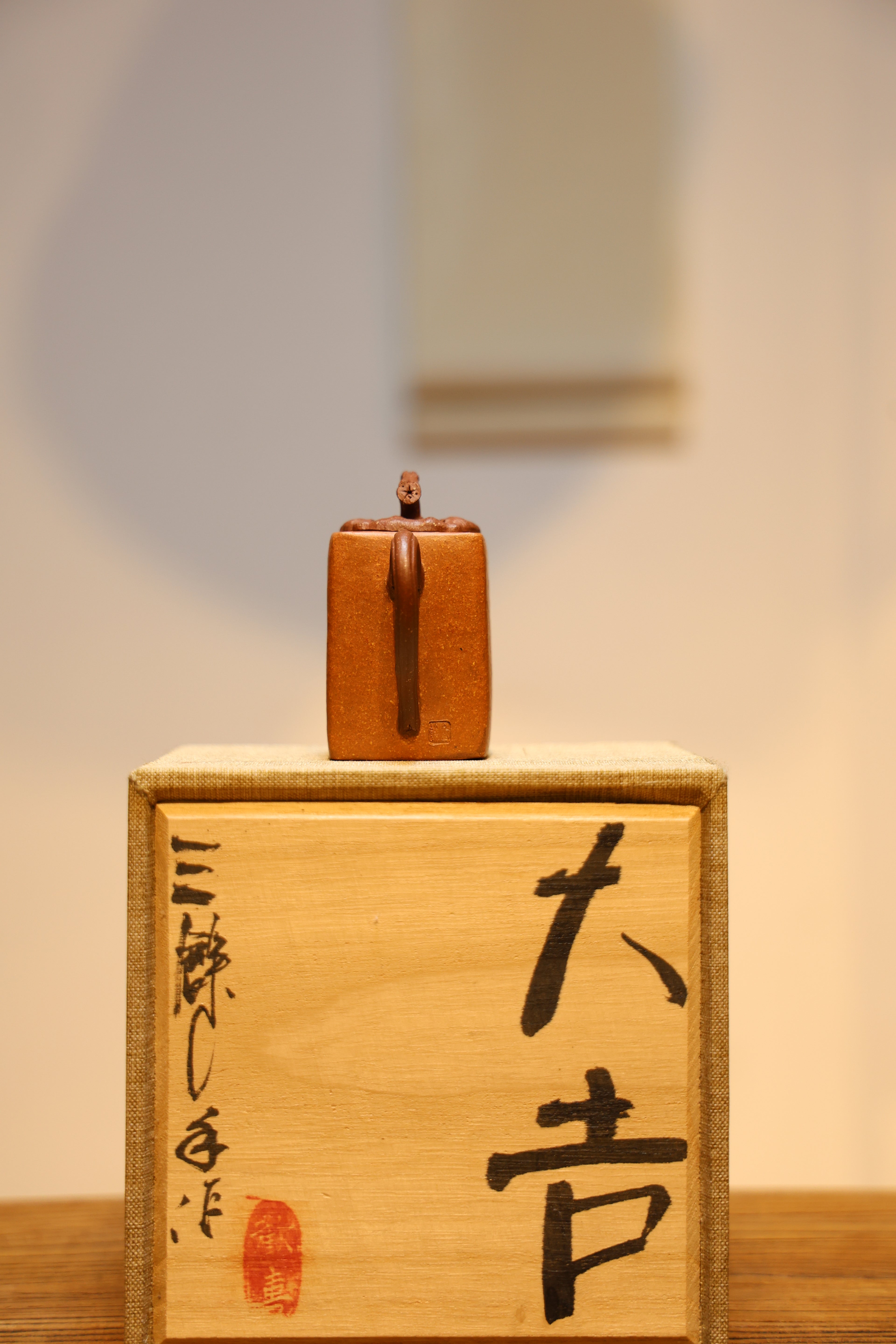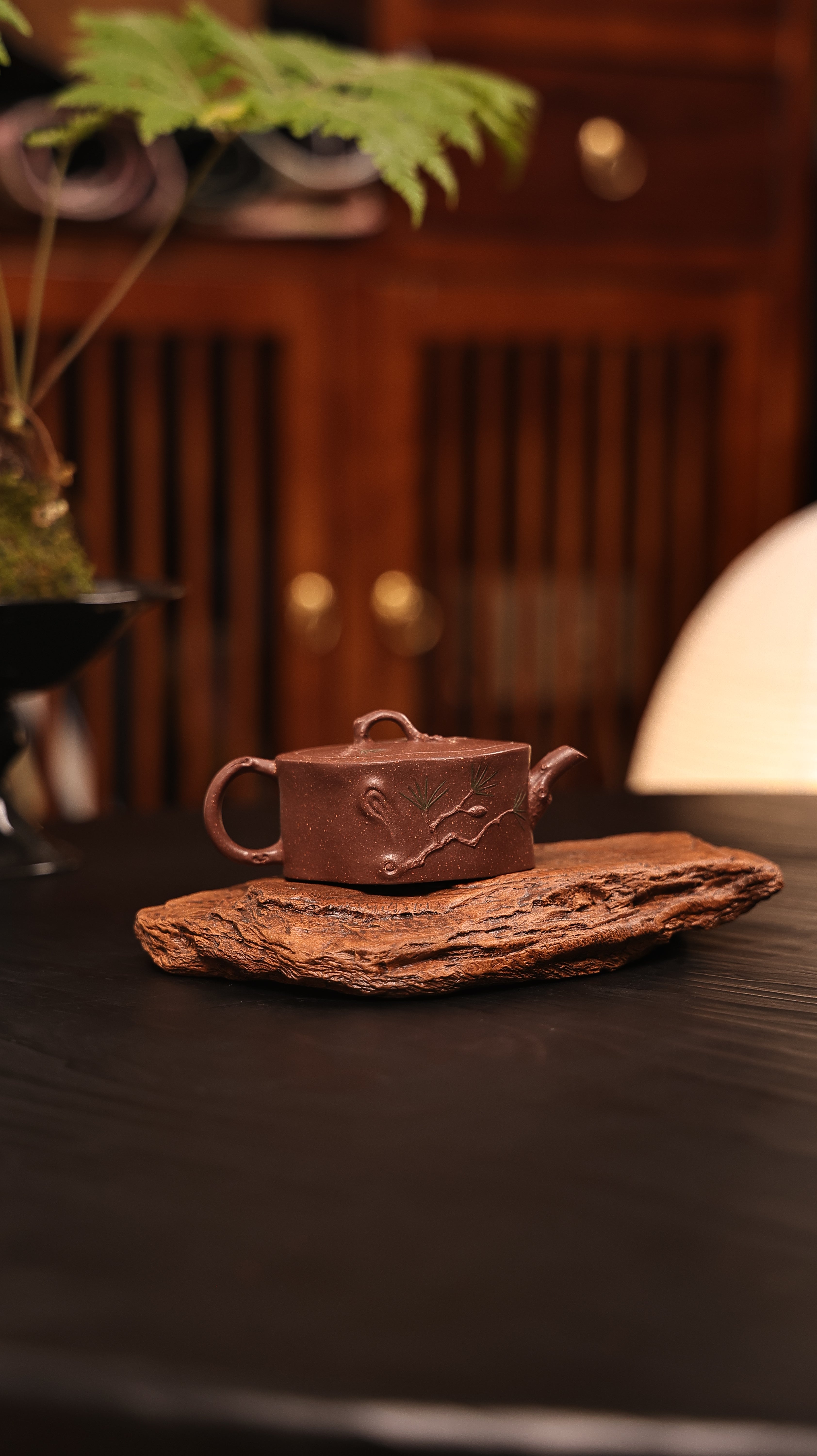
Sustained background determines Yixing clay vessels within ages,
Manifesting uncommon aspects obtained from native violet earthen materials, those containers acquire a finish through utilization, augmenting aroma infused from steeped infusions.
Appreciating Yixing Clay: Broad Insights into Zisha
Various followers honor the exceptional makeup of Yixing plum clay, a base of time-honored Chinese ceramics. Emerging from the Yixing region of Jiangsu province, this notable clay shows an refined mineral blend, that bestows amazing qualities to the crafted containers. Forms within Zisha, including Bing Mud, Duan Ni Mud, and Jiang Xi Mud, each demonstrates specific tones, consistencies, and baking traits, shaping the absorption and the decisive flavor refinement of the elixir.
Oriental Pottery Rituals: Uncovering Skill
Celestial teapots embody above mere holders for tea; they signify centuries of traditional sophistication. From the distinguished Yixing clay variations, respected for their absorbent nature which imparts unmatched flavors to the drink, to the subtle porcelain from Jingdezhen, each piece narrates a record of devotion. The development process is an detailed journey, often bequeathed through generations of experts. These craftsmen use established processes such as hand-building, designing on wheels, and detailing, demonstrating profound reverence for the foundation and the discipline itself. Imagine the effort invested in each piece as a symbol of Chinese tradition legacy.
- Eastern clay urns: a famous assortment.
- Translucent pottery teapots: noted for their lightweight design.
- Hand-building techniques: a laborious yet rewarding procedure.
Eastern Clay Kettle Maintenance: Conserving Your Prized Possession
Optimal maintenance of your unique Yixing Zisha flask is vital to maintaining its durability. Crafted from distinct purple sand dirt, these premium teapots develop a complex patina after practice, significantly boosting their allure. Eschew solvents; a gentle rinse with warm solution is capable. Do not scalding water for scrubbing the teapot, as it may break down its structure. Allow it to dry naturally away from bright daylight. Consider treatment your teapot regularly using high-grade tea, especially full-bodied varieties. Here is a brief overview:
- Swill with comfortably warm water.
- Refrain from chemical agents.
- Grant it to become free of moisture.
- Familiarize with select tea.
Beginnings of Yixing Teapots: Foundational Periods
The record of Yixing teapots arises modestly during the Ming dynasty, approximately the 16th period. Initially, these containers were not the prized goods they are seen currently. They were created by provincial potters using the particular purple clay extracted solely in the Yixing vicinity. These early productions were mainly utilitarian, intended for frequent practice and often ordinary in composition. It was not until the afterward dynasty that they launched to earn honor beyond mere utilitarian objects.
Opting For the Proper Purple Pot: A Starter's Explanation
Approaching the field of Yixing teapots can be discouraging, but refrain from doubting! For newcomers, the primary factor is understanding the mud. Certified Yixing clay is prized for its transparency, allowing the teapot to take in the tea's aroma over time, enhancing every developing session. Assess the outline; traditional bulbous shapes prevail, yet individual preferences determine. Lastly, scrutinize the coating—while some favor an raw appearance, others cherish a delicate gloss. Take your time in the pick process—this is an investment in a adored piece of craft.
Yixing Teapots and Their Significance on Chinese Infusion Tradition
Zisha pitchers, derived from Yixing, China, have profoundly influenced historic Chinese infusion culture. These Yixing clay teapots, prized for their particular shade, fabric, and exceptional ability to impart a subtle savor to the drink, symbolize more than mere receptacles; they are valued objects and symbols of renown. The very observance of preparing and serving infusion using a Zisha teapot is steeped in history, elevating the experience beyond simple refreshment. Dynasties of artisans have honed their techniques, passed down through tribes, resulting in highly coveted Yixing Teapot pieces. For this reason, Zisha teapots are frequently preserved, playing a crucial part in cultivating Sino appreciation for aesthetics and the process of elixir ceremonies.
- Characteristic Clay Composition
- Adding Subtle Flavor
- Elegant Craftsmanship
Establishing Legitimate Special Native Pieces
Obtaining a verified Yixing teapot can be a pleasurable experience, but the sector is often saturated with counterfeits. Dividing between a authentic antique and a current reproduction requires thorough inspection. Key features include the clay's russet shade, often displaying patterned signs, and the absence of modern baking imprints. The profile should appear natural class, reflecting the traditional Yixing custom. Finally, analyzing the creator's emblem is essential to verify validity against official testimonies.
- Assess the clay's grain.
- Look for irregularities, indicative of crafted quality.
- Consult an authority for evaluation.
Buying Eastern Pottery: A Elaborate Explanation to Purple Clay Analysis
The sector of Native Zisha teapots presents a distinct opening for educated admirers. Consistently, the worth of these artisanal artifacts is affected by multiple considerations, such as the standard of composition, the talent of the builder, the legacy significance, and, naturally, the current market. Newcomers should focus on researching the diverse categories of Zisha clay—such as Ice River, Tranquil Vessel, and Scarlet Earth—and researching the traits linked to each. Thorough assessment of the teapot's form, color, and badge is concurrently paramount to make experienced judgments when investing.