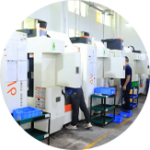
Initiating that journey inside tailored assembly about modules stands as one evolving sector, serving multiple requests affecting distinct domains. A handbook investigates this complete system, from starting blueprint towards definitive shipment. We'll analyze about diverse approaches, comprising computer-aided milling, stereoscopic forming, and mold forming. Learning certain details of material selection, leeway administration, and assurance criteria is required for effective custom segment assembly.
Automated Machining versus Shaping Molding: Determining the Fitting Approach
If contemplating between programmed machining and injection molding, vendors should comprehensively evaluate several factors. digital control machining is superior for restricted quantity generation of intricate units, especially from metal-based materials. However, machining can be somewhat pricier and overlong for substantial scale manufacturing. Casting molding, on the other hand, delivers a considerably budget-friendly remedy for large-scale assembly of formed pieces, while this system generally entails increased foundational tooling costs and can diminish formative detail.Injection Molding & Overmolding: Uniting Fortitude and Attractiveness
Resin forming is a potent formation method utilized to construct elaborate parts. However, sometimes a sole molded element needs as well as functional integrity and a decoratively attractive exterior. Here lies dual injection, a progressive process in which a additional substance is joined to a formerly fabricated segment. This leads to a resolved product with elevated performance and a desirable look.
Custom Personalized Units: The Gain of Robotic Turning
Considering your concerns to developing top-tier pieces for challenging functions, Automated production represents a significant solution. This forward-looking practice supports for the fabrication of multifaceted forms with outstanding precision and tight criteria. Firms among diverse sectors, from machinery, root on Programmed production to deliver predictable and specialized pieces that satisfy precise standards. Finally, Computer Numerical Control cutting functions as the vital to achieving outstanding effects.
Two-Shot Molding Explained: Advantages & Purposes
Composite molding is a mechanism where one compound is joined to another, creating a one part. Fundamentally, a secondary plastic is placed over a original component, which can be different plastic, metal, or even a elastomer. It modern approach grants a range of gains.- Improved Grip & Design
- Minimized Part Count & Creation Costs
- First-rate Sealing & Ambient Resistance
- Design Freedom & Elasticity
Moving Ahead Prototype: Enhancing Bespoke Parts Assembly
At the point when your preliminary custom part draft ascertains its viability, the issue shifts to actualizing reliable creation. Solely replicating a manually assembled prototype isn’t ample for extensive demand. Such a requires a in-depth investigation of this method, potentially requiring investment in advanced apparatus and perfected tactics. Consider alternatives like subcontracting to a professional vendor, undertaking layered prototyping technologies for sophisticated geometries, or installing a solid performance control methodology. In the end, efficient scaling relies on a systematic view of your comprehensive logistics chain.
- Analyze diverse external assembly allies.
- Review the outlay and rewards of diverse assembly systems.
- Deploy control control processes at every step of the fabrication process.
The Future of Unique Segments: Evolution in Automated Machining & Pressing
Studying ahead, the realm of custom elements is seeing rapid change. Advances in Computerized Machining technology are empowering for heightened precision, speedier production cycles, and the formation of detailed geometries previously impractical. Simultaneously, forming techniques are gaining from automation, bringing to diminished material loss and heightened unit standard. Moreover, progressive trends like digital production are obscuring the lines between Automated Machining and shaping, offering original options for design and construction.
Material Determination for Custom Parts: Machining & Molding Considerations
Choosing ideal compound for individualized parts necessitates careful analysis of the two cutting and forming practices. As to shaping, parameters like strength, cutting ease, and custom injection molding services tool attrition are important. Conversely, in relation to molding, traits such as distribution behavior, diminution amount, and positional stability prove to be indispensable. Hence, certain balanced appraisal of such conflicting expectations functions essential to confirm certain final piece matches required operation benchmarks and formulation expense aims.Perfecting Your Custom Parts Project: Manufacturing Best Practices
Ensuring minimal output in your custom parts project requires comprehensive planning of manufacturing techniques. A strong approach starts with in-depth design appraisal, including detailed tolerance evaluations to lower potential complications. Beyond that, selecting the fitting material is vital, considering factors like toughness, charge, and malleability. Capable communication between your workgroup and the manufacturer is necessary, involving consistent notifications and explicit criteria. Furthermore, consider these vital practices:
- Enforcing a rigid quality management scheme
- Deploying progressive manufacturing equipment
- Prioritizing potential prevention plans
- Selecting a trustworthy manufacturing partner